Openers
Garage Door Opener Repair in Gardner, MA
A humming opener and a door that stays put is a common Gardner call. It may be the opener, the sensors, or a door the motor should not be lifting. Call before you burn the unit out.
Free referral to an independent local contractor. Disclosure.
When the opener is the problem, and when it is not
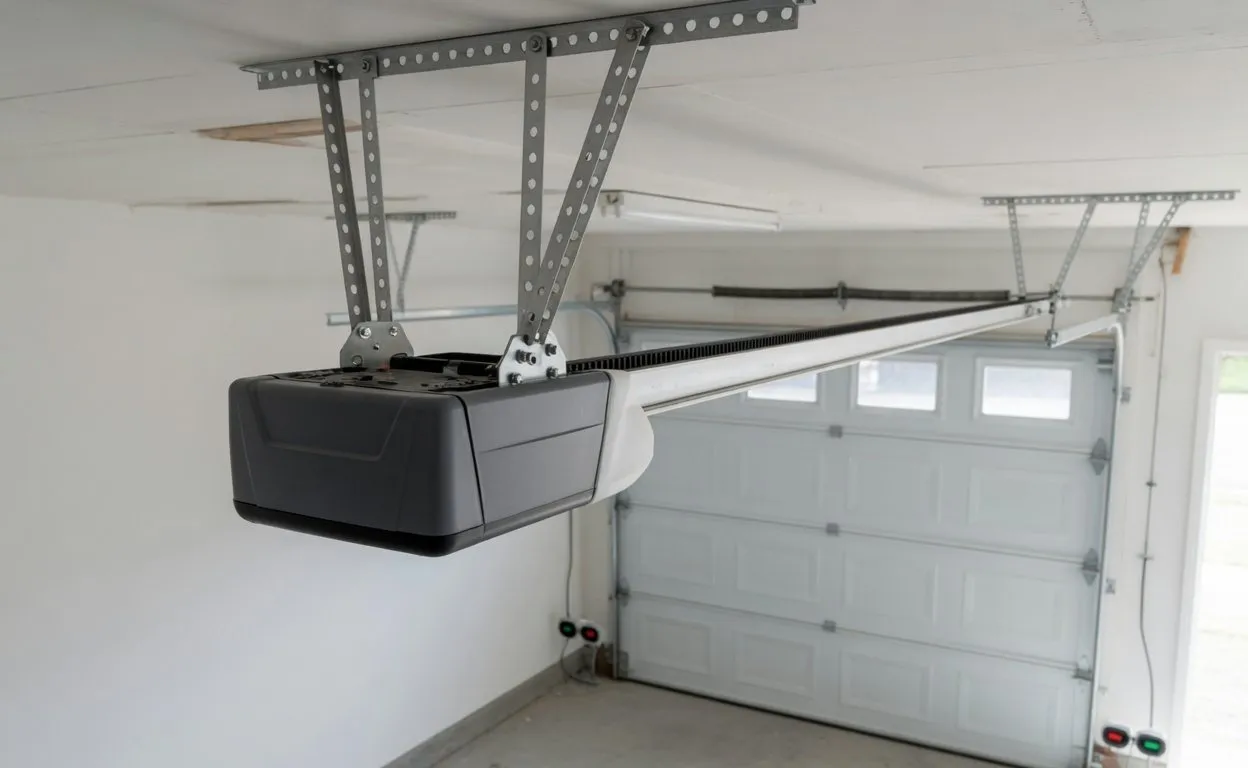
Garage door opener repair in Gardner starts with a distinction people miss. The opener is a motor, a rail, and a trolley. The springs are what cancel the weight of the door. If a spring has broken, no amount of opener repair will make that door safe. If the springs are intact and the wall button does nothing, you are in opener territory.
Listen before you call. A click and silence is different from a hum, which is different from a grind, which is different from a motor that runs while the door stays still. Those details tell the contractor what to put on the truck. Same-day opener visits are often available. Ask.
This site connects the call. The person who repairs or replaces the opener is an independent contractor. Ask what the work will cost, and ask about license and insurance, before they take the unit apart.
Sensors, remotes, wall buttons, and keypads
A door that will not close, but will open, is often the safety sensors. They are the small eyes near the floor at each side of the track. The beam between them has to be intact or the door is supposed to refuse to close. That is a feature. Sun in the late afternoon, a hockey stick, a trash bin, or a sensor bracket that got kicked is enough to break the beam. The opener light may flash. Count the flashes if you can, and tell the contractor the brand on the housing. LiftMaster, Chamberlain, Genie, and Craftsman units are all common in Gardner garages, and their flash patterns are not interchangeable. Do not publish a guess to yourself and start turning screws.
Remotes fail in boring ways. Batteries die. A wall control locks the radio out. A keypad sticks after a wet winter. One remote working and another silent usually means the remote, not the motor. No remote and no wall button is a different call: power, the limit system, or the logic board.
There is a red emergency-release cord on many openers. It disconnects the trolley so you can move the door by hand. Use it only when the springs are holding the door. If you suspect a broken spring, leave the cord alone.
Repair the opener, or put a new one in
Some failures are worth repairing. A worn gear kit on a unit that is otherwise dry and quiet, a bad wall console, or sensors that need to be remounted can be the whole job. Other failures are the end of the unit. A smoked logic board, a bent rail, water damage from a leak above the motor, or an opener that is old enough to lack modern safety reverse are reasons to talk about replacement.
Ask the contractor to separate the two costs: repair this unit, or install another. Also ask whether the door is balanced. An opener that died while lifting an unbalanced door will be replaced by a second opener that dies the same way unless the springs are corrected.
If you are already replacing a tired door, it is normal to talk about the opener in the same visit. The installation page covers new doors. The opener decision can ride along with that call so you are not booking two trips for one opening.
Safety reverse, and what not to adjust
Modern openers must reverse when the door meets an obstruction on the way down. The force setting controls how hard the door pushes before it decides to stop. Turning that force up because the door is heavy is how people hide a spring or roller problem and create a door that does not reverse when it should. Leave the force dials alone.
Ask the contractor to test reverse before they leave, using a piece of wood or a similar object in the door’s path. Never use a hand, a child, or a pet as the test. While they are there, ask them to confirm the photo eyes are the correct height and aimed at each other.
Power cuts are common in winter storms around Gardner, Ashburnham, and Hubbardston. Some openers have a battery backup so the door still runs when the street is dark. Some do not, and the red release is the only way out, again only if the springs are intact. If outages are a pattern at your house, ask the contractor whether backup is available for your rail. That is a question, not a promise from this site.
What to say on the call
Have the brand and a short description of the symptom. Useful versions sound like this: the motor hums and the chain does not move; the door closes two feet and reverses; the wall button works and both remotes do not; the opener light flashes four times and then stops. Add the town. A door in Winchendon is not a door in Westminster, and the contractor plans the day from the town name.
If the door is also crooked, off the track, or has a loose cable, say that too. Running an opener against a door that is out of the track bends the rail and the sections. Cut power to the opener and move to the cable and track description when you call. If the whole door is rusted, dented from a car, or full of daylight at the edges, say that as well so the conversation can include repair versus a new door.
Opener work is still a phone call first. Use the number on this page, tell them Gardner or the nearby town, and ask what they can do today.
Questions to settle before you call
The opener hums and the door does not move. What now?
Stop pressing the button. A hum often means the motor is powered but the drive or the door is bound. It can also mean a broken spring is asking the motor to lift the whole door. Call and describe the sound.
The remote died but the wall button still works. Is that the opener?
Not always. Start with the remote battery, then tell the contractor whether the wall button, the keypad, and the remote disagree. The logic board and the remote receiver are separate from a simple battery.
The door starts down and then reverses.
Photo eyes are a frequent cause. They sit a few inches off the floor on either side of the opening. Sun, cobwebs, a bumped bracket, or a blocked beam will reverse the door. Leave the force settings alone and call.
Should I replace the opener or repair it?
Ask the contractor after they see it. Stripped gears and a dead logic board on an older unit are often a replacement. A misaligned sensor or a bad remote is not. Get the cost of each path before work starts.
Related services
- Garage door repair
Stuck, crooked, noisy, or half-open residential doors.
- Spring replacement
Torsion and extension springs after a bang or a heavy door.
- Cable and track repair
Off-track doors, frayed cables, bent track, and bad rollers.
- New garage door installation
New residential doors when repair is no longer the right fix.
Towns around Gardner
- Templeton, MA 01468 · About 4 miles from Gardner
- Westminster, MA 01473 · About 5 miles from Gardner
- Ashburnham, MA 01430 · About 6 to 7 miles from Gardner
- Winchendon, MA 01475 · About 8 miles from Gardner
- Hubbardston, MA 01452 · About 7 miles from Gardner
- Athol, MA 01331 · About 12 miles from Gardner